
Sopa de Miso com Feijão Aduki
By: Agi Kaja
Esta é proteína com propósito. Esqueça os "pós mágicos" com textura de giz e os isolados de proteína; esta é uma sopa estrutural profundamente saborosa, à base de Feijão Aduki — uma potência proteica de origem vegetal. Ao utilizar o grão inteiro, obtém uma matriz de fibras complexa que os batidos industriais simplesmente não conseguem replicar. Combinado com miso fermentado para um reforço probiótico.
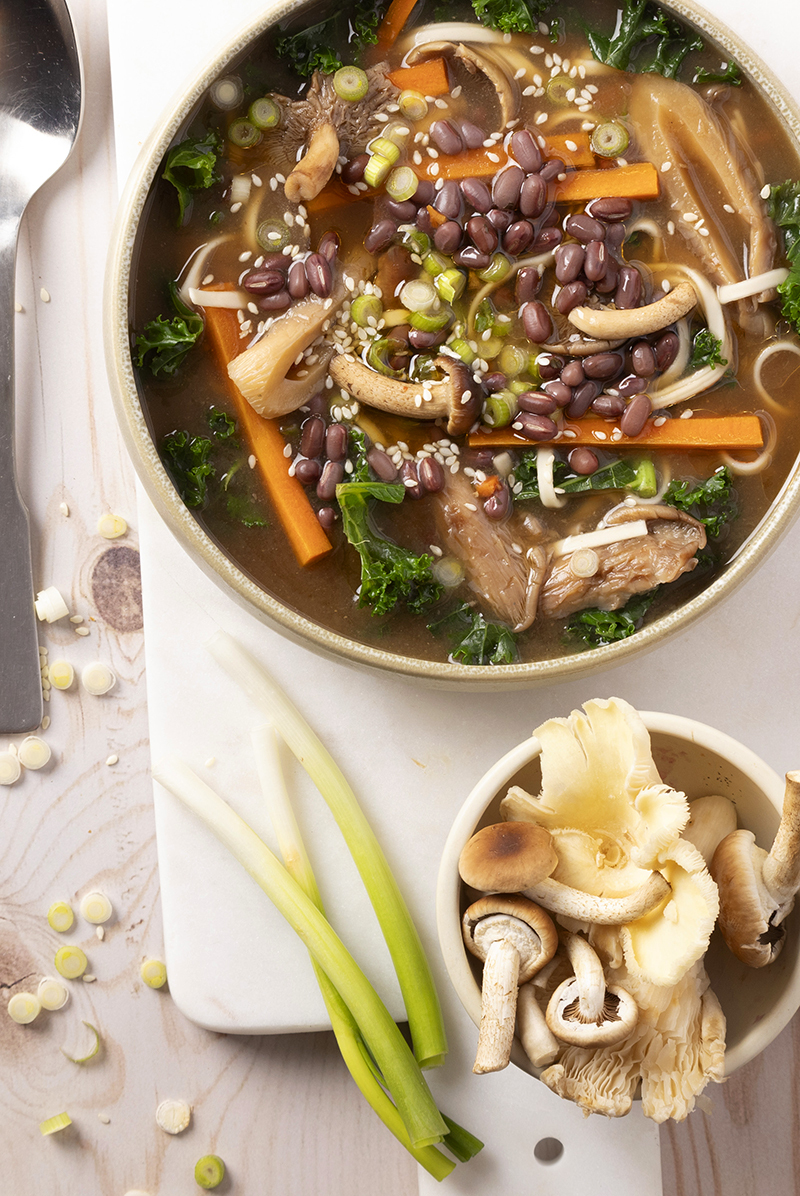
Aduki Bean Miso Soup
Give your body a restorative boost with our Aduki Bean Miso Soup—a recipe designed to replace high-sodium instant packets with the real power of a clean-label pantry. By combining protein-rich aduki beans with fermented miso, you create a powerhouse for gut health and nutritional density. This soup is a purely Non-UPF way to enjoy deep, umami-rich flavours, keeping your energy stable and your microbiome happy without the industrial additives.
Ingredientes
- 1 cup cooked aduki beans (or canned, drained & rinsed)
-
4 cups vegetable stock
-
3 tbsp miso paste
- 1 cup oyster and shiitake mushrooms, torn or sliced
- 1 cup kale, chopped
- 1 small carrot, thinly sliced
- 1 portion soba or udon noodles (cooked separately)
- 1–2 spring onions, chopped
- 1 tsp soy sauce or tamari
-
1 tsp sesame oil
- Toasted sesame seeds for garnish
Preparação
- Bring the vegetable stock to a gentle simmer. Add the oyster mushrooms, carrot, and aduki beans, and let them cook for 5–7 minutes until the vegetables are tender.
- Lower the heat, dissolve the miso paste in a ladle of hot stock, then stir it back into the pot, making sure not to let the soup boil after adding miso.
- Stir in the chopped kale and cook for 1–2 minutes until just wilted.
- Divide the cooked soba or udon noodles into bowls, then pour the soup over the noodles.
- Finish with a drizzle of sesame oil if using, and sprinkle with spring onions and toasted sesame seeds. Add a splash of soy sauce to taste, and serve hot.

Deixar um comentário
Todos os comentários são moderados antes de serem publicados